
I. Product Positioning and Technical Characteristics
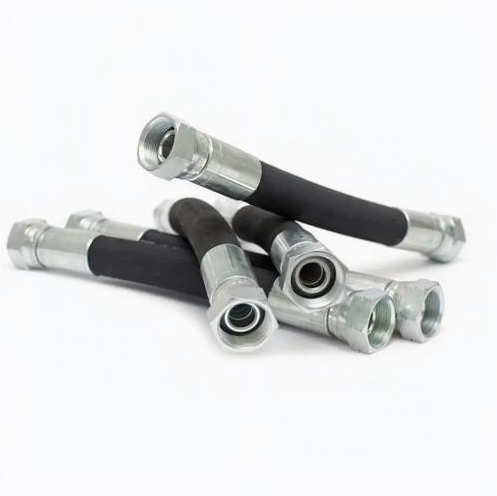
Threaded air hoses are a type of flexible piping product with threaded connectors at the ends, specifically designed for flexible connections between pumps, air tanks, dryers, and air-consuming equipment in industrial compressed air delivery systems. Their large diameter and high-pressure ratings make them suitable for compressed air transmission under high flow and high pressure conditions, serving as flexible connection sections in centralized air supply pipelines in metallurgy, chemical industry, shipbuilding, mining, and large manufacturing workshops.
Threaded connection is the core feature that distinguishes this product from quick-connect and flanged connections. The threaded connector achieves a seal through the engagement of internal and external threads, featuring a compact structure, high connection strength, and strong pressure resistance, making it suitable for applications requiring high connection reliability and infrequent disassembly. When using threaded connections with large-diameter hoses, a balance must be struck between pipe rigidity and connector sealing reliability to ensure no leakage or loosening under pressure pulsation and vibration conditions.
II. Structural Design and Material Composition
Inner Layer (Inner Rubber Layer): Primarily made of nitrile rubber, with a thickness typically between 2.0mm and 4.0mm. Industrial compressed air often contains trace amounts of lubricating oil, originating from compressor lubrication or pipeline oil mist lubricators. The polar nitrile groups in the nitrile rubber molecular structure give it excellent resistance to mineral and synthetic oils, effectively resisting the swelling and aging effects of oil mist on the rubber compound. For oil-free compressed air systems, EPDM or butyl rubber can also be used for the inner layer. The inner layer must maintain low permeability to prevent compressed air leakage through the pipe wall, which could lead to pressure loss.
Reinforcing Layer: The reinforcing layer of large-diameter high-pressure air hoses typically employs a multi-layered high-strength steel wire braided or wound structure. Braided structures offer good flexibility and pulse resistance; wound structures are more advantageous in terms of pressure resistance and are suitable for higher pressure ratings. The steel wire is made of high-carbon steel with a tensile strength of not less than 1800 MPa, and is copper- or zinc-plated to enhance adhesion to the rubber. The number of reinforcing layers is determined based on the working pressure, commonly two braided layers or four wound layers.
Outer Layer (Outer Rubber Layer): Primarily made of neoprene or styrene-butadiene rubber, with a thickness typically between 1.5mm and 3.0mm. The outer layer must be wear-resistant, weather-resistant, ozone-resistant, and UV-resistant. In industrial environments, it must also resist oil, chemical splashes, and mechanical friction. The outer layer surface usually has a marking strip along its length indicating product specifications and pressure rating.
Threaded Fittings: Fittings are typically made of carbon steel or stainless steel, with a galvanized or passivated surface to improve corrosion resistance. Thread types include metric threads, imperial threads, NPT tapered pipe threads, and BSP threads, adaptable to different national and regional pipe interface standards. Large-diameter hose threaded fittings are typically connected to the hose body using a crimping process. The fitting core surface has annular grooves or serrated structures that embed into the inner layer of the hose during crimping, increasing connection strength and sealing effect.
III. Core Performance Parameters
Working Pressure: The working pressure of large-diameter high-pressure air hoses typically ranges from 1.0 MPa to 4.0 MPa, with some products exceeding 6.0 MPa. The burst pressure is no less than four times the working pressure.
Inner Diameter Specifications: Large-diameter specifications typically cover DN25 to DN100, including 1 inch, 1-1/4 inch, 1-1/2 inch, 2 inch, 2-1/2 inch, 3 inch, and 4 inch sizes. Larger diameters can be customized.
Temperature Range: Standard products cover an operating temperature range of -20℃ to +100℃, with some products extendable to +120℃.
Minimum Bending Radius: Related to the inner diameter and reinforcement structure, the minimum bending radius of large-diameter high-pressure air hoses is typically between 5 and 8 times the pipe diameter.
Pressure Resistance: The connection strength between the threaded fitting and the hose body must meet the requirement of not detaching or leaking under the design pressure. The tensile strength of the crimped fitting is typically required to be no less than a certain percentage of the hose body's burst strength.
Air tightness: Compressed air delivery places high demands on the air tightness of hoses. The low permeability of the inner rubber layer and the reliable sealing of the joint connections are key factors in ensuring air tightness.
Online Message
Please fill in your name and message, and don't forget to email and/or call if you wish. We will reply within 24 hours.
